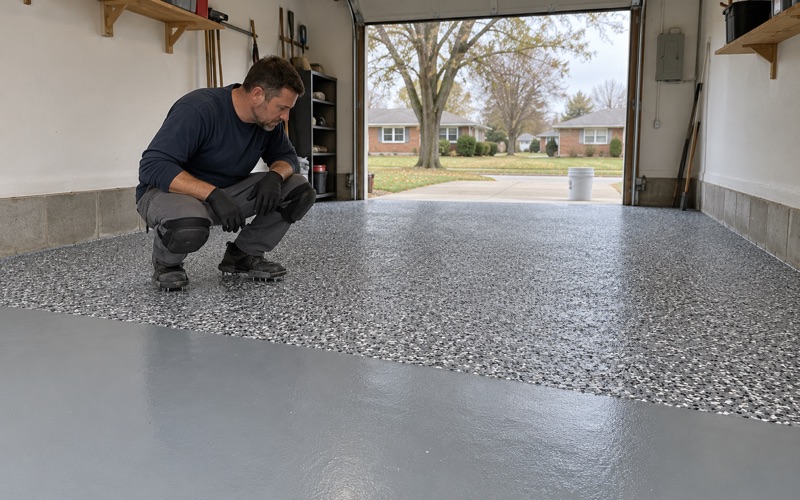
Dubuque Epoxy Flooring has put more than 20 years into epoxy flooring, and our work in The Galena Territory starts from one plain fact about the houses: the person who owns the floor is often not standing on it. We plan garage and lower-level coatings so every decision gets made on paper, the slab gets tested before the price is final, and the cure is protected when nobody is home to watch it.
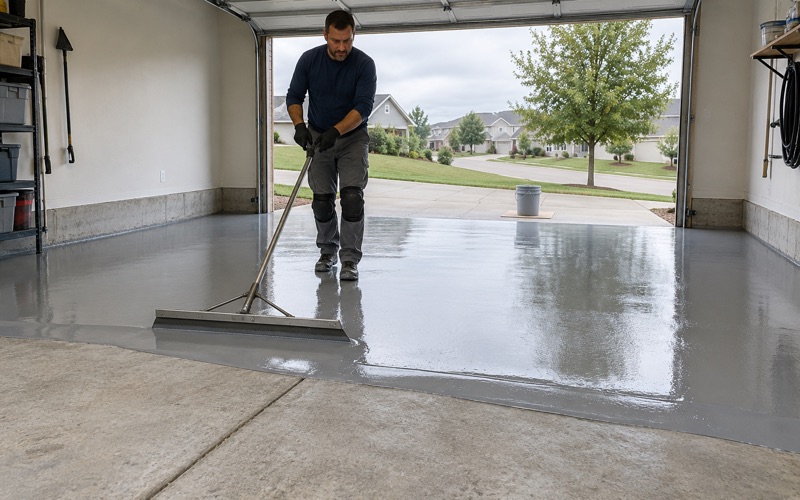
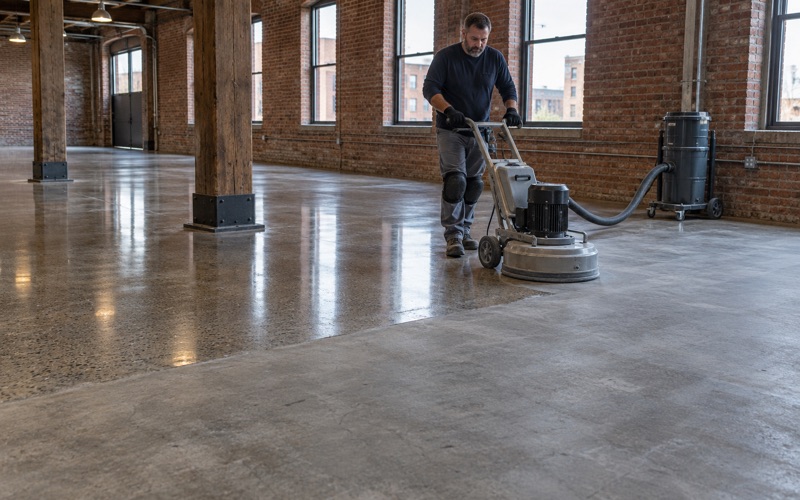
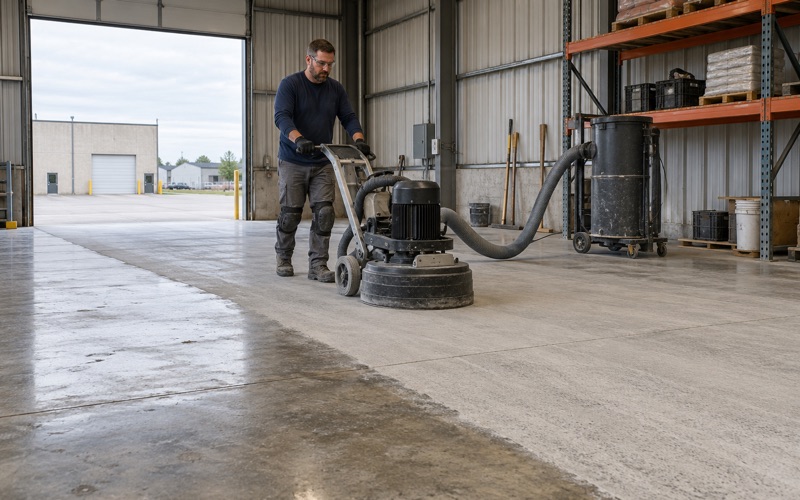
Every floor we coat is opened with a diamond grinder or a shot blaster rather than an acid wash, so the resin bonds into a real profile instead of a smooth, sealed surface. The proposal names the product line, how many coats go down and the finished thickness, which lets an owner who lives elsewhere check the finished floor against the quote from a set of photos.
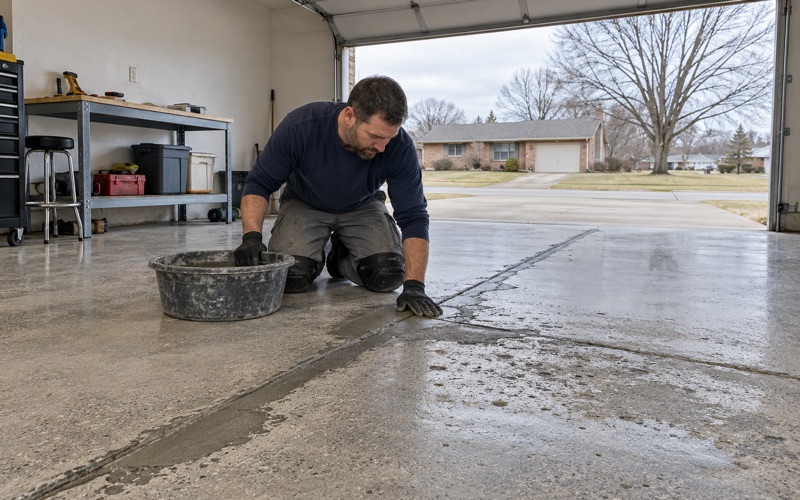
Moisture testing sits in the written scope on every slab, garage or basement. Cracks, spalls and failing old coatings are mapped before anything is sold, and if a slab needs repair or replacement before it should be coated, we say so in writing rather than on a phone call that one co-owner missed.
A Community Built Around Second Homes
Most Houses Here Sit Empty Much of the Year
The Galena Territory is a census-designated place in Jo Daviess County, and it counted 1,500 residents in the 2020 census, up from 1,058 in 2010. The housing count tells a different story than the population does. The American Community Survey records 2,105 housing units and holds 1,193 of them for seasonal, recreational or occasional use, against 845 that are occupied.
Second homes are the norm here, not the exception, and that changes how a floor job has to be run. Most of the stock is also fairly young: about 87 percent of the units were built between 1980 and 2009. A newer house is not automatically a drier garage, so we test that slab exactly the way we would test a basement poured long before it.
Pricing a Floor for an Owner Who Lives Elsewhere
An absentee owner usually cannot walk the garage with us, so the site visit has to produce a record. We photograph the slab, mark cracks and spalls on a floor sketch, note any old coating that is lifting, and send all of it with the proposal so the decision can be made from a kitchen table several states away.
The quote then reads like a specification. Product line, coat count, broadcast type and finished thickness are named, along with the surface profile we intend to reach, stated as an ICRI CSP range. When two owners share a house, both read the same document and can ask the same questions before anyone signs.
Access, Keys and Who Is on Site
We settle access before the first working day: who holds a key or a door code, who lets the crew in, and who checks the house after we leave. A smart lock, a scheduled garage door or a neighbor with a spare key all work, as long as the arrangement is written into the scope rather than assumed.
A crew working in an empty house also has to leave it the way it was found. Grinding dust is captured at the machine with a vacuum instead of being rinsed toward a floor drain, the furnace and water heater areas are protected, and the owner receives a photo set at the end of each working day.
Looking for epoxy-flooring closer to Dyersville? See Epoxy-Flooring in Dyersville.
The Illinois Home-Repair Pamphlet Comes First
Home Repair: Know Your Consumer Rights
Illinois puts the paperwork duty on the contractor, not the homeowner. Under the Home Repair and Remodeling Act, the Attorney General’s pamphlet “Home Repair: Know Your Consumer Rights” goes to the customer before any contract is signed, as its own separate document rather than a paragraph tucked inside a proposal.
For a remote owner, that means the pamphlet travels ahead of the contract, not behind it. We send it first so the owner can read it on their own time, and the contract that follows is not presented for signature until the pamphlet has been delivered.
The Consumer Rights Acknowledgement Form
For work over $1,000, the customer signs and dates a Consumer Rights Acknowledgement Form, and the contractor signs it too. The form carries our business name and address, and one part stays with the homeowner while the other stays in our file. Most garage and lower-level coatings in the Territory clear that threshold without trouble.
When an owner signs from a distance, we still collect both signatures before a start date is booked. A form that turns up after the crew has already started does not do the job the law intends, so the signed acknowledgment works as a gate in our own scheduling.
What the Contract Spells Out
The pamphlet lists the basic terms a contract should carry: the contractor’s full name, address and telephone number, a description of the work, start and estimated completion dates, the total cost, the schedule and method of payment, and the grounds for termination. Because our proposals already name products, coats and thickness, the description of work is specific enough to measure.
The pamphlet also reminds owners that a sale made at the home can be canceled within three business days of signing. If a contract is signed at the house during our walk-through, we set the start date beyond that window instead of pressing for the earliest open slot on the calendar.
It also tells owners to check with local and county government about permits. Building permits for this area come from Jo Daviess County Planning and Development, which has worked from the 2021 International Residential Code since January 1, 2025, and interior floor coating is not on the county’s permit list of new houses, accessory buildings, decks, structural work, electrical, plumbing and life-safety work.
Holding Cure Temperature in a House That Sits Empty
A Setback Thermostat and a Curing Floor
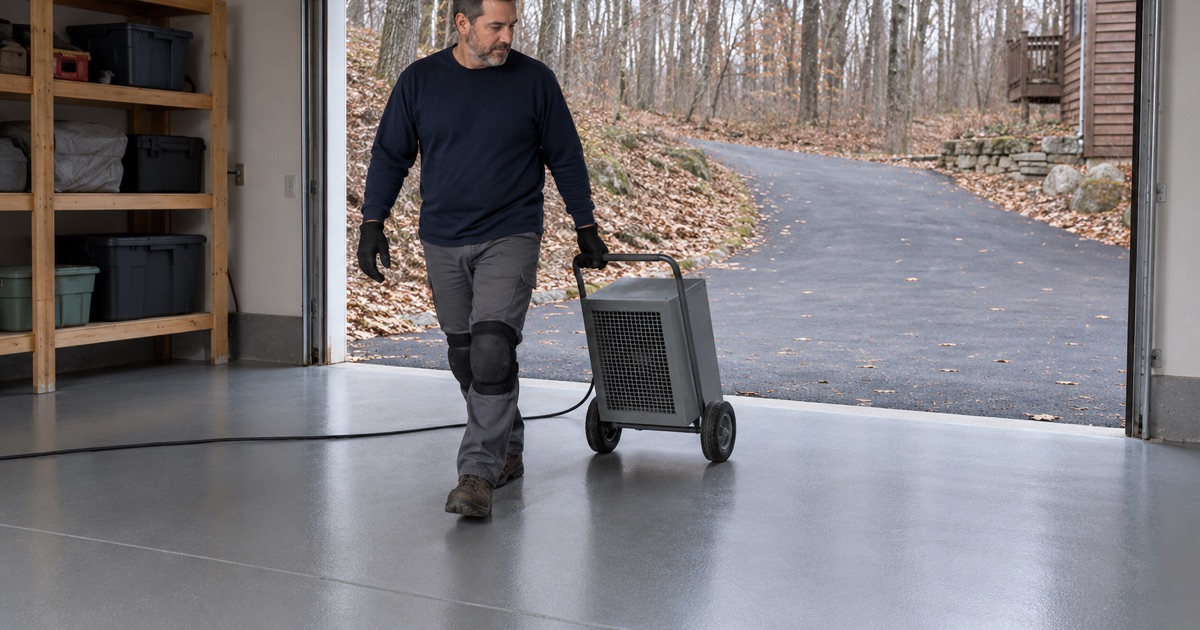
Resin cures on the temperature of the slab, not on the date printed in the contract. A second home kept at a winter setback, or with the heat turned down between visits, can leave a garage or lower-level slab well below what a coating needs, even when the house looks perfectly ready from the driveway.
So the cure temperature for the product we specify becomes a written line in the contract. The owner, or whoever manages the house, agrees to bring the space up before we arrive and to hold it there through the full cure, and we record who adjusts the thermostat and when it can go back down.
Reading the Slab on the Morning of the Job
We read the concrete itself rather than the room air. A surface thermometer and a check of the dew point spread at the slab surface tell us whether the floor is warm enough and dry enough, and amine blush on an epoxy coat that cured too cold is the defect we are working to avoid.
If the readings are wrong on the morning we planned to coat, we do not coat. Moving a job by a day costs an absentee owner far less than grinding off a cloudy or soft finish and paying for the system a second time.
Moisture Testing Before the Price Is Final
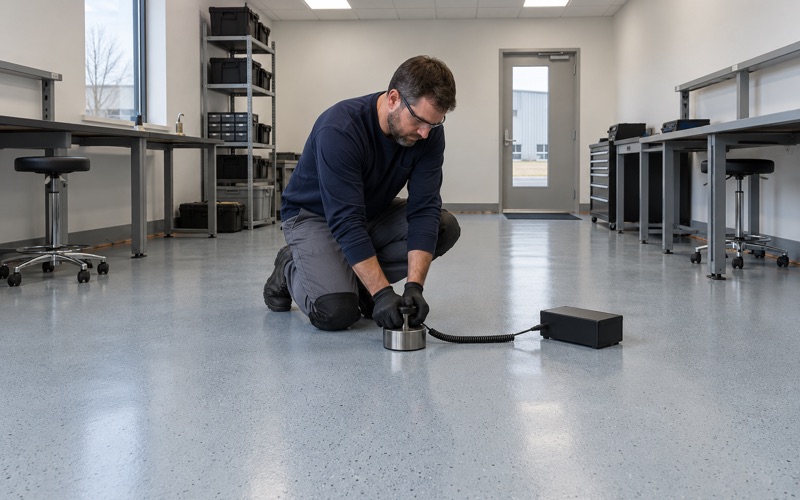
Temperature is one half of the slab’s condition and moisture is the other. Depending on the floor, we use ASTM F2170 in-situ relative humidity probes, ASTM F1869 calcium chloride testing or an ASTM D4263 plastic sheet screen, and the result goes into the proposal before the price is locked.
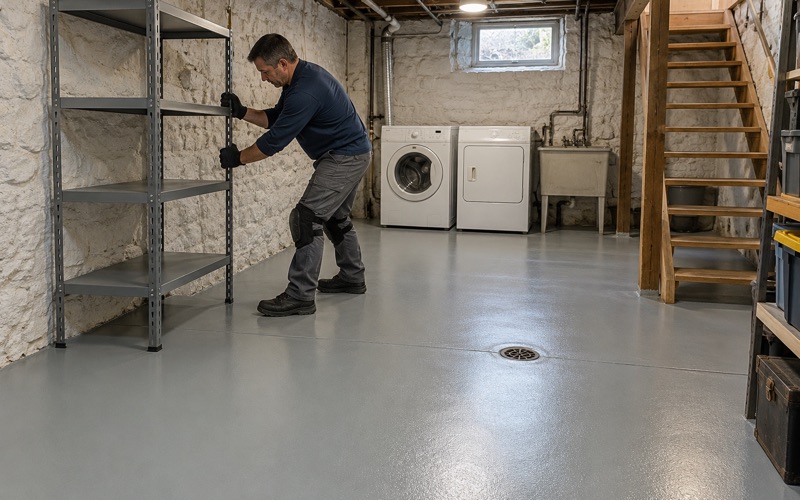
High readings change the system, often to a moisture-mitigation primer under the 100% solids epoxy. We explain at the same time what a coating warranty excludes, and moisture vapor transmission is the first exclusion we name. A lower level that shows past water gets its sump pit and floor drain checked first, because a coating does not stop seepage.
We also keep radon out of the sales conversation. Radon testing and mitigation take a state credential, and a floor coating is never sold as radon work on any house we quote.
Short-Term Rental Homes and the Gap Between Bookings
Licensed Rentals in Jo Daviess County
Plenty of Territory homes earn their keep as short-term rental properties. Jo Daviess County licenses property rented for fewer than 30 consecutive days under its Guest Accommodations ordinance, which went into effect January 11, 2000. The license is renewed every year by December 31, and the county’s Planning and Development Department inspects the rental.
Those inspections look at smoke detectors, carbon monoxide detectors and bedroom egress, not floor finishes. What matters to us is the calendar a working rental creates: guests arrive on dates the owner has already sold, and a garage or lower-level floor has to fit between them.
Fitting the Cure Into the Booking Calendar
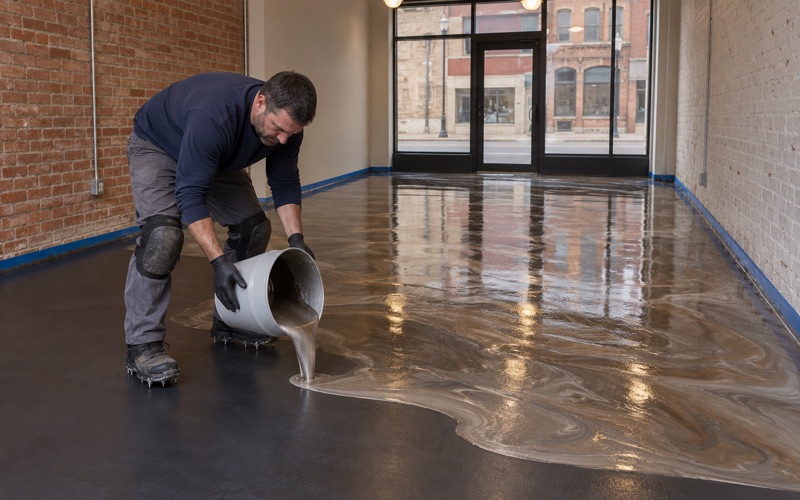
We plan a rental floor backward from the next check-in. The window has to cover grinding, repairs, every coat, the full cure and an airing-out period before guests walk in, and the owner blocks those nights on the booking calendar before we commit to a start date.
Faster-turn systems such as polyaspartic topcoats can shorten the gap on some garage floors, but we do not quote a cure time for any product until the slab has been tested and the temperature it will sit at is confirmed. When the open window is too tight, we tell the owner to wait for a longer one.
Odor, Texture and Illinois VOC Limits
Guests notice a smell long before they notice gloss. Low-odor products are a comfort choice for attached garages and lower levels in a rental, and we offer them that way rather than as a requirement. For Illinois jobs we pick products to meet the state’s own VOC limits, which bind whoever applies the coating as well as whoever sells it.
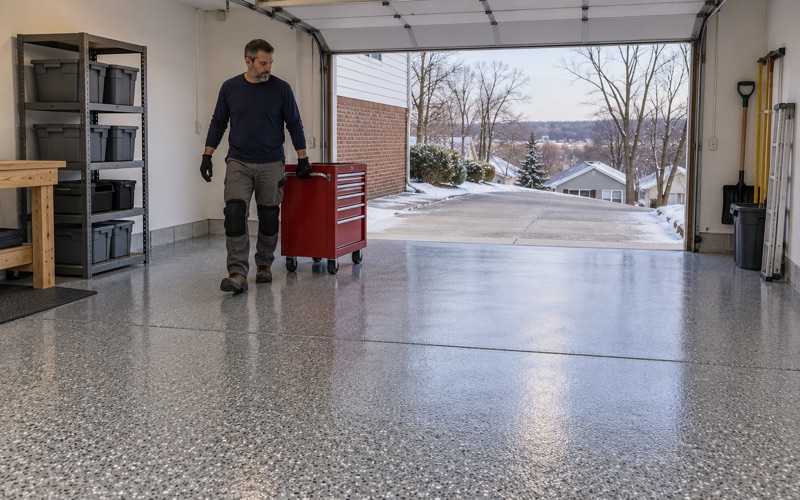
A rental garage also takes traffic from a different car with every stay. A vinyl flake or quartz aggregate broadcast under a polyaspartic or polyurea topcoat sets the slip-resistant texture, and we specify that texture by the broadcast and topcoat used, so the owner knows exactly what the floor underfoot was built to do.
- 20+ Years on Concrete
- Moisture Tested Before Pricing
- Diamond Ground, Never Acid Etched