
Dubuque Epoxy Flooring installs flake epoxy floors in Dubuque, IA for garages, basements, workshops, locker rooms and commercial back rooms, serving surrounding cities including Asbury, Platteville, The Galena Territory, Dyersville and Lancaster. A flake floor locks colored vinyl chips between a base coat and a clear topcoat, and in 20+ years of coating concrete it has become the system we install most.
The chips do more than add color. They hide small slab imperfections, mask dust and tire marks between cleanings, and leave a texture that grips better than a smooth gloss coat. For a floor that sees real use, those practical benefits matter as much as the look.
Every flake floor still starts with a ground, repaired and moisture-tested slab. The written proposal names the base coat, the flake blend and coverage, the topcoat and the finished thickness, so you can see exactly what the floor is made of.
How a Flake Floor Is Built
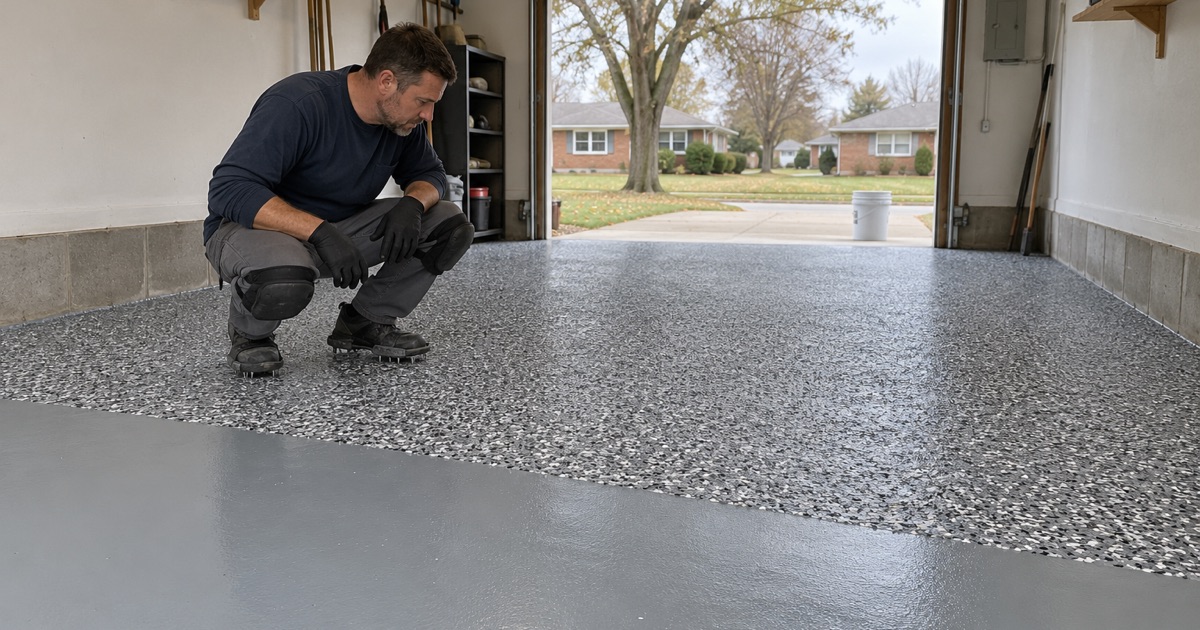
The Base Coat
After grinding and repairs, a pigmented base coat goes down, usually a 100% solids epoxy. Its color is chosen to match the flake blend, so any small gaps in coverage do not stand out. The base coat carries the bond to the slab and holds the chips in place.
We lay the base coat in sections sized so the crew can broadcast each one while it is still wet. Working too large an area at once leaves parts of the coat skinned over before the flake lands, and those spots end up with thin or loose coverage.
Broadcasting the Flake
While the base coat is wet, vinyl flake is broadcast by hand across the floor. For a full broadcast, the chips are thrown until the base disappears completely and the surface looks like a solid bed of flake. That full coverage gives the most uniform look and the best texture.
Once the base coat cures, the loose flake is scraped off and vacuumed. Scraping knocks down chips standing on edge, so the surface is ready for an even topcoat.
The Clear Topcoat
The clear topcoat seals the chips and takes the wear. We usually use a polyaspartic or polyurea topcoat because it resists ultraviolet ambering, abrasion and chemicals. Its thickness controls the texture: a heavier topcoat smooths the surface, while a lighter one keeps more of the chips’ grip.
Sheen can also be chosen at this step. A satin topcoat hides fine scratches and dust better than high gloss, which is why many owners of busy garages and shops choose it.
Choosing Blend, Size and Coverage
Color Blends
Flake comes in blends that mix several colors, from grays and tans to blues, reds and blacks. Light blends brighten a dark garage or basement, while darker blends hide dirt between cleanings. We bring sample boards so you can see blends next to your walls, cabinets and lighting.
How the floor will be used matters too. A blend with mid-tones hides both light dust and dark tire marks, which suits a garage that sees winter traffic.
Chip Size
Smaller chips give a tight, speckled, granite-like finish. Larger chips read bolder and show more of each color. The chip size also affects texture, since larger chips can create a slightly rougher surface under the topcoat.
Many owners pick a chip size by looking at a small sample, then find the finished floor looks busier or quieter than expected. A large sample board, viewed from standing height, gives a far better idea of how the pattern will read across a whole garage.
Full or Partial Broadcast
A partial broadcast scatters chips over a solid base color, leaving much of the base visible. It looks lighter and uses less flake, but it shows more slab flaws and has less texture. For garages and basements, we usually recommend a full broadcast for the durability and grip it provides.
Partial broadcast still has a place in offices, showrooms and other spaces where a cleaner, more modern look matters more than hiding dirt. In those rooms, the floor sees less grit and moisture, and the solid base color can be part of the design.
Where Flake Floors Work Best
Garages Through Winter
Garage floors here take brine, rock salt, slush and hot tires from November through March. A full flake broadcast under a polyaspartic topcoat hides salt residue and tire marks between cleanings and gives grip when the floor is wet with snowmelt.
In an unheated garage, the install is timed to the slab temperature and the dew point, not the calendar. We will suggest waiting for spring rather than coating a slab that is too cold to cure.
Basements, Laundry and Workshops
In a basement, flake brightens the space and handles laundry spills, tools and furniture. The basement still gets a moisture test and a look at the sump pit and floor drain first, since flake does nothing to stop seepage.
Workshops benefit from flake because it hides small chips and stains from dropped tools and spilled oil. A satin topcoat keeps the floor looking tidy between cleanings.
Locker Rooms and Commercial Back Rooms
Locker rooms, restrooms, break rooms and stock areas need floors that clean easily and grip when wet. A full flake broadcast with a textured topcoat suits all of them, and it holds up to the daily cleaning these spaces get. On commercial jobs we phase the work around business hours and use fast-curing topcoats so areas return to use sooner.
Keeping a Flake Floor Looking New
Cleaning
A flake floor cleans with a dust mop, a soft mop or a floor squeegee and a mild, pH-neutral cleaner. In winter, squeegeeing salty slush out before it dries keeps residue from building up on the surface. Avoid harsh acids and solvents unless the product sheet allows them.
Place a pad under kickstands, jack stands and furniture legs, since a narrow point load can dent even a hard topcoat. Mats at the door from the garage into the house also help, catching the grit that would otherwise be ground into the floor underfoot.
Repairs and Recoating
If something heavy gouges the floor, the damaged area can be ground out, rebuilt with base coat and flake, and topcoated. The random chip pattern hides the edges well, especially if the original blend is still available.
Over years of use, the topcoat wears first in high-traffic paths. It can be lightly abraded and recoated to restore the surface without disturbing the flake layer underneath.
- 20+ Years on Concrete
- Moisture Tested Before Pricing
- Diamond Ground, Never Acid Etched