
Dubuque Epoxy Flooring handles concrete floor repair in Dubuque, IA for garages, basements, shops and commercial buildings, serving surrounding cities including Asbury, Platteville, The Galena Territory, Dyersville and Lancaster. With 20+ years of preparing slabs for coatings, we know which damage can be repaired and which means the slab should be replaced.
Cracks, spalls, pitting and scaling are common on older slabs and on garage floors that have been through many salt seasons. Left alone, they grow, collect dirt and water, and become trip hazards. Coated over without repair, they break through the new floor within a season or two.
Every repair job starts with mapping the damage, marking each crack, spall and pit before the grinder comes out. The written proposal lists what will be repaired and how, and it says plainly when part of a slab should be replaced rather than patched.
Cracks in Concrete Floors
Stable Hairline Cracks
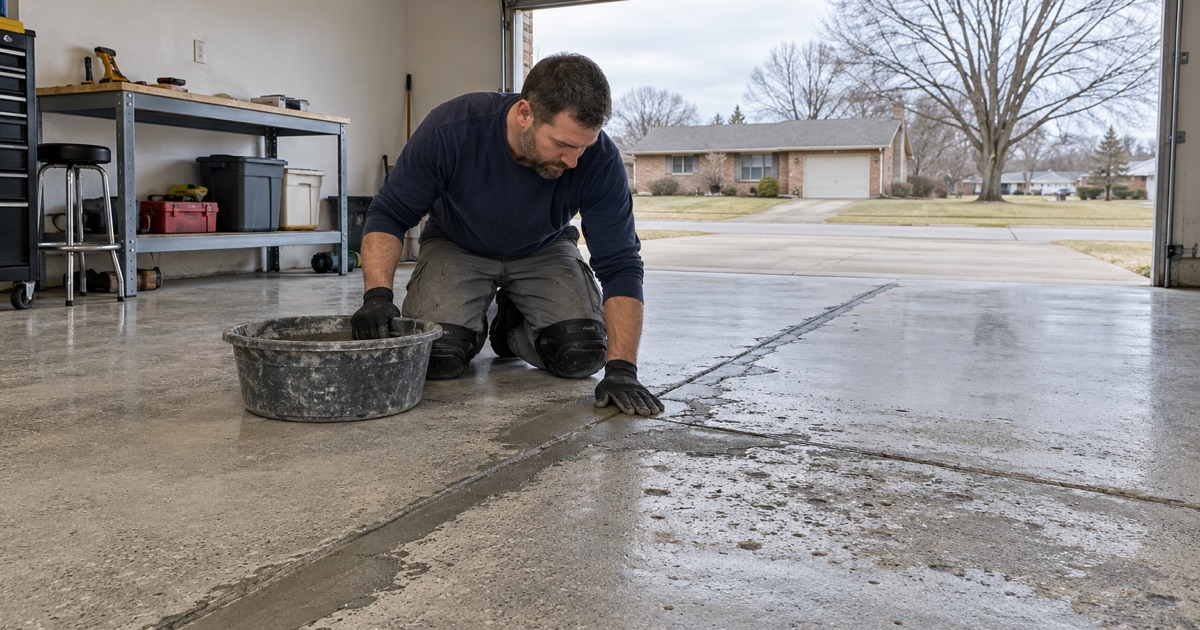
Almost every slab cracks as it shrinks while curing. Fine hairline cracks that have not moved in years are usually stable. We open them slightly with a crack chaser so the filler can grip, fill them with a repair material made for the coating system, and grind the surface flush.
In a flake floor, those lines usually disappear under the broadcast. In a solid color or metallic finish they may still show faintly, which we explain before the work begins.
Wider and Moving Cracks
A crack that is wide, offset or still opening tells a different story. It can come from settlement, soil movement, frost heave or overloading. A rigid filler in a moving crack will break again, and so will any coating over it.
We look at the pattern, check whether one side sits higher than the other, and ask how the crack has changed over time. Where movement is still happening, we recommend structural evaluation or replacement of that section before any coating goes down.
Control Joints
Control joints are cut into slabs so the concrete cracks along a planned line. Some owners want them filled and coated over for a seamless look, while others prefer to keep them open. We explain the trade-off, because a joint coated over may still crack through the coating as the slab moves with the seasons.
Spalls, Pitting and Salt Scaling
Spalled Edges and Chipped Joints
Spalling happens when chunks break off the surface, often along joints, at the garage door and where heavy wheels cross. We cut back to sound concrete, remove loose material and rebuild the area with a repair mortar or epoxy patch, then grind it flush with the surrounding slab.
Spalls at the garage door are the most common. That edge sees snowmelt, salt and tire impact every winter, and the repair there needs to be tough enough to handle the same wear again.
Pitting and Popouts
Pitting shows up as small holes across the surface, sometimes from weak aggregate near the top of the slab that pops out in freezing weather. Each pit is filled and ground flat before coating, so the finished floor is smooth and the coating does not sink into the holes.
Widespread pitting can also signal a weak surface layer across the whole slab. In that case we grind deeper to reach harder concrete before filling, rather than patching hundreds of individual holes in a surface that will keep breaking down.
Salt Scaling on Garage Slabs
Calcium chloride and rock salt deicers ride into garages on tires from November through March. The brine soaks into bare concrete, and as it freezes and thaws, thin flakes of the surface break off. Dubuque Regional Airport averages 144.1 nights a year at or below freezing, so a bare garage slab here gets plenty of those cycles.
We grind past the scaled layer to sound concrete and fill any deep areas. Coating the repaired slab then keeps the brine on top, where it can be squeegeed out instead of soaking in for another winter.
Repair or Replace
Signs a Slab Needs Replacement
Some slabs are past repair. Large sections that have sunk or heaved, pieces that rock underfoot, wide cracks with one side much higher than the other, and concrete that crumbles under a screwdriver are all signs that patching will not last.
Coating or patching that kind of slab only hides the problem for a short time. We tell you that at the start, before you spend money on a floor that will fail with the concrete under it.
Frost, Soil and Slab Movement
Slab movement in this area can come from frost, poorly compacted fill or water under the slab. Downtown and the North End sit on fill and river sand, while the bluffs carry thin loess over Galena Group dolomite. Movement problems are a matter for concrete or foundation work, and we refer them out rather than patching over them.
Repairing Before Coating
When the slab is sound enough to keep, repairs are made as part of the coating job. We choose repair materials that cure quickly and bond with the coating system, so the repaired areas can be ground and coated without long delays. The proposal shows both the repairs and the coating as one scope.
That way, there are no surprises once the grinder opens the surface and reveals damage that was hidden under old paint or dirt. The mapping we do before quoting catches most of it, and anything new found during grinding is discussed with you before we go further.
Repairs in Basements and Shops
Old Basement Floors
Older basement floors often carry patches from past plumbing work, uneven areas and cracks from decades of settling. We map those patches, test whether they are still bonded, and remove any that have come loose. Basements also get a moisture test, since water coming through a crack can undermine any repair.
Shop and Warehouse Floors
Shop and warehouse floors take forklifts, pallet jacks and dropped parts. Spalled joints and broken edges get worse quickly under hard wheels. We rebuild joints with materials suited to wheel traffic and schedule the work around shifts so the floor stays usable while repairs cure.
- 20+ Years on Concrete
- Moisture Tested Before Pricing
- Diamond Ground, Never Acid Etched